When Markets Suddenly Stop Making Sense
Why violent market moves feel chaotic — and why they usually are not
16 February 2026
There are moments in markets when price ceases to feel like movement and begins to feel like disorder. | |
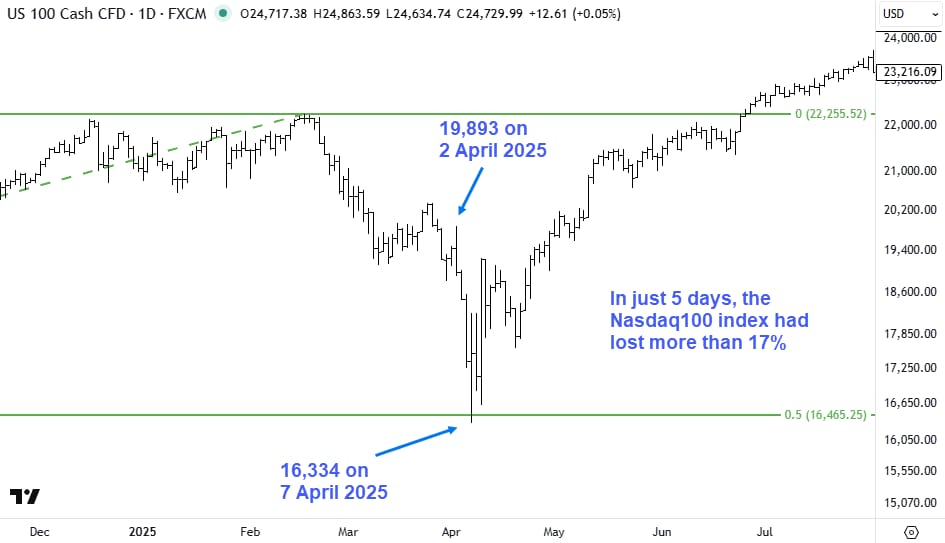
The early days of April 2025 were one such moment. Prices did not simply decline — they appeared to abandon continuity. Explanations multiplied faster than the fall itself. News outlets attributed the collapse to tariffs, policy shock, global retaliation, liquidity withdrawal and systemic fear, often all at the same time. | |
Yet what disturbed traders most was not the magnitude of the decline. | |
It was the sense that the market had changed its nature. | |
The Experience of Rupture | |
Most participants can tolerate loss. | |
When price accelerates beyond our mental model of normal fluctuation, the mind assumes a change in reality has occurred. We do not experience volatility — we experience a break in causality. | |
The past no longer feels usable. | |
This is the moment traders abandon structure and begin searching for reasons. | |
What Actually Changed | |
The tariffs did not create uncertainty. | |
They created certainty. | |
Everyone now believed they understood why price was falling. And paradoxically, that shared conviction produced the emotional conditions we describe as panic. Not confusion — conviction. | |
Markets feel chaotic not when participants disagree, but when they agree too strongly about a narrative. | |
| |
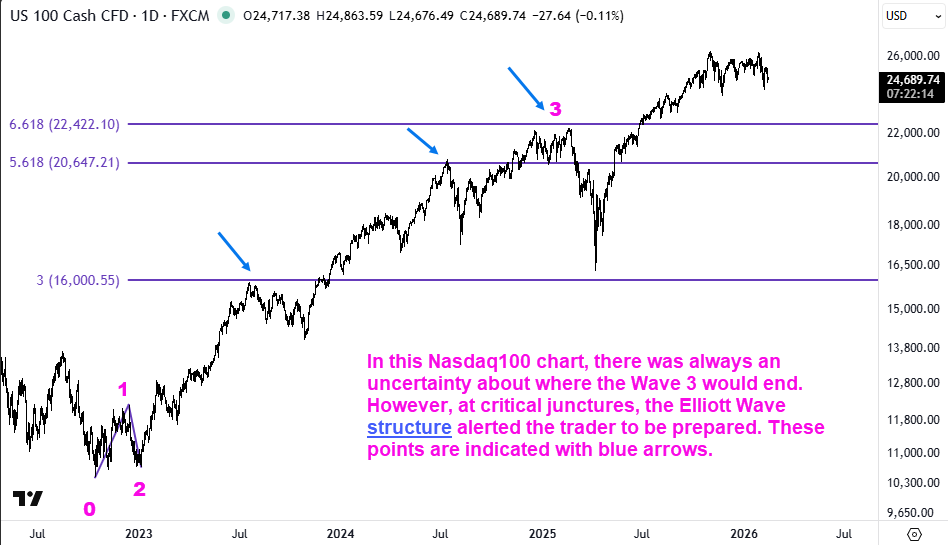
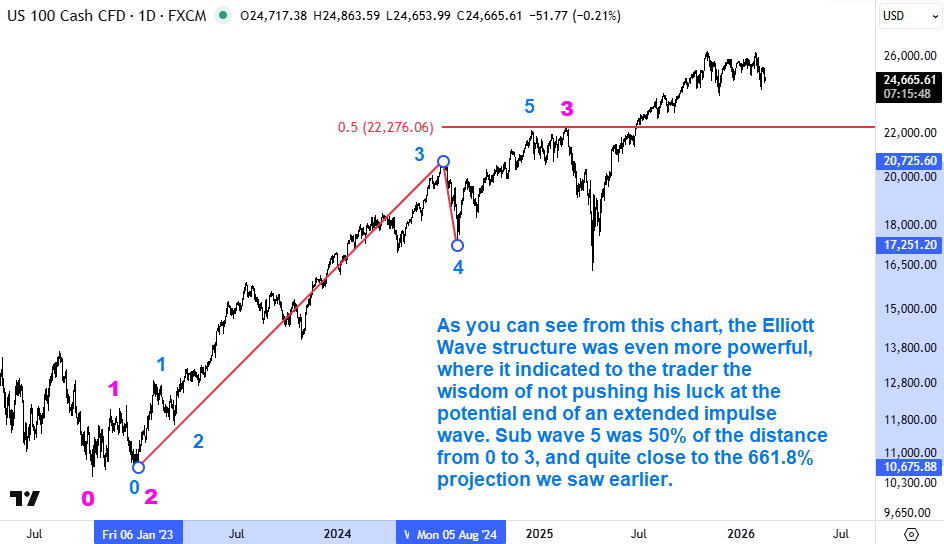
Long before the decline, price behaviour had been unfolding within proportionate relationships. Nothing in the structure suggested stability or instability — only progression. | |
Structure does not forecast events. | |
The Speed Illusion | |
Rapid movement convinces us that the market has entered a different regime. | |
But speed alters perception more than it alters structure. | |
When change happens gradually, we interpret it. | |
This psychological shift is crucial. The human mind assumes that a large move must require a large cause. We therefore believe a new market has begun, rather than recognising an existing process unfolding quickly. | |
| |
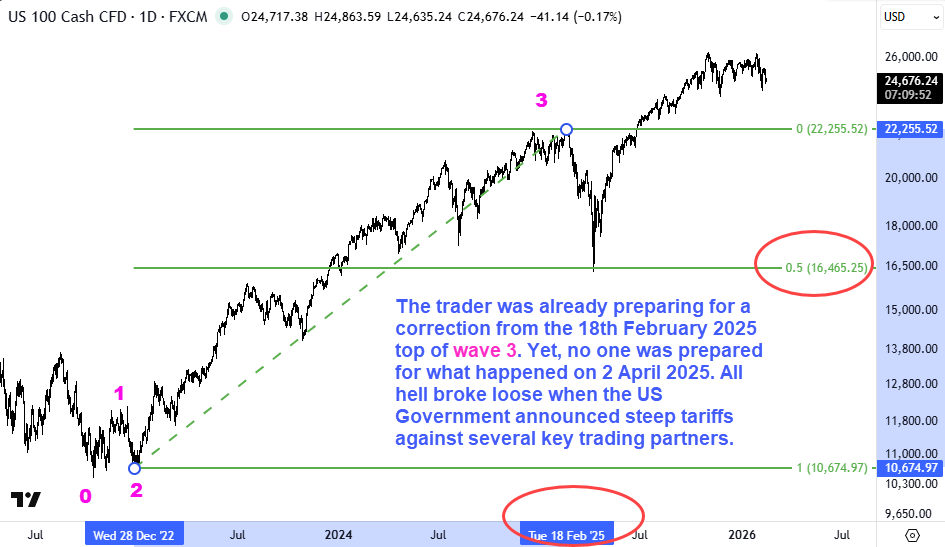
Before the decline, the possibility of a correction existed structurally, but without any identifiable trigger. After the decline began, the trigger became obvious and the structure invisible. | |
In other words, the event increased narrative clarity while reducing interpretive clarity. | |
Panic and Proportion | |
During the sharpest phase of the selloff, prices appeared to move irrationally. Yet internally the swings retained proportion. The relationships between advances and declines remained measurable even at the point of maximum emotional intensity. | |
| |
The decline eventually reached a level that was not emotionally meaningful but structurally meaningful. The importance of the level was not that it caused a reversal. Its importance was that behaviour never lost continuity even when perception did. | |
Markets rarely become disordered. | |
Why Shock Feels Different | |
Participants believe news drives markets because news explains movement after it happens. But explanation is retrospective coherence, not causal structure. | |
The greater the emotional consensus, the simpler market behaviour often becomes. When participants react simultaneously, behaviour synchronises. What appears chaotic externally often becomes internally orderly. | |
Shock is therefore a psychological event more than a structural one. | |
| |
What Elliott Wave Actually Provides | |
Elliott Wave does not remove uncertainty. | |
Its usefulness lies not in prediction, but in preserving continuity of interpretation when experience insists on rupture. The method does not tell us what must happen. It prevents us from believing that anything can happen. | |
The difficulty traders face with Elliott Wave is therefore not counting waves but trusting continuity when perception demands abandonment of prior understanding. | |
The perspective described here forms part of the broader behavioural framework developed over decades of market study and later organised into Five Waves to Financial Freedom. |